
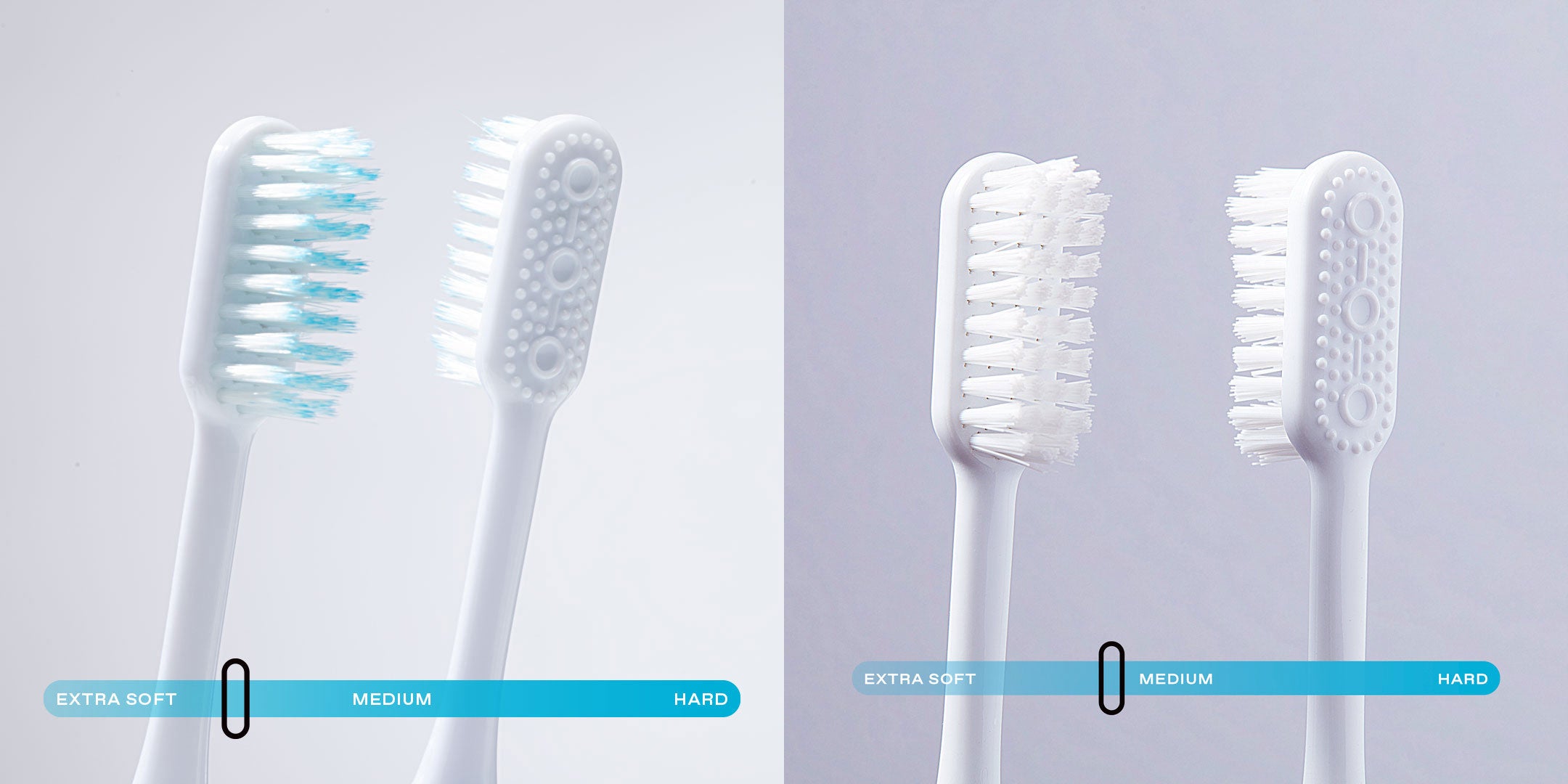
One of the simplest-looking choices in your bathroom — soft or medium bristles — quietly shapes the long-term health of your teeth and gums. Here's what actually matters, what dentists recommend, and how to pick the right brush for you.
The quick answer
For almost everyone, soft bristles are the better choice. They clean just as effectively as medium bristles when used correctly, with far less risk of damaging your enamel or gums. Dental associations — including the American Dental Association — consistently recommend soft over medium or hard. The rest of this guide explains why, and the few cases where medium might make sense.
Soft bristles: gentle, and smarter than they look
Soft bristles are made from thinner, more flexible filaments designed to be less abrasive on tooth enamel and gum tissue. That makes them ideal for sensitive teeth and gums, anyone prone to gum recession, and — honestly — the vast majority of people, because most of us brush harder than we think.
They protect your enamel
Enamel, the hard outer layer of your teeth, wears down with overly aggressive brushing and doesn't grow back. Soft bristles flex instead of scrape, preserving enamel over the long run even if your technique isn't perfect.
They're gentler on your gums
Stiffer bristles can irritate delicate gum tissue, causing inflammation, bleeding, and — over time — gum recession, which exposes teeth to bacteria and decay. Soft bristles clean along the gumline without the collateral damage. In studies with dental hygienists at the University of Washington School of Dentistry, participants reported more comfortable plaque removal with soft bristles.
Floss-tip bristles reach where others can't
Not all soft bristles are equal. Nada's soft, tapered “floss-tip” bristles are up to 17× slimmer at the tip than standard bristles, so they slip deeper between teeth and along the gumline — reaching plaque that flat-trimmed bristles (and sometimes even floss) miss. You get a deeper clean without the harsh scrubbing.
Medium bristles: when do they make sense?
Medium bristles are stiffer and more rigid. The appeal is intuitive — they feel like they scrub harder, and some people who build up plaque or tartar quickly prefer that sensation. The catch is that “feels like a deeper clean” and “is a deeper clean” aren't the same thing.
Used with a heavy hand, medium bristles are more likely to abrade enamel and irritate or recede gums. If you have gum disease, receding gums, sensitive teeth, braces, or dental work like veneers or crowns, medium bristles are generally the wrong tool. They're only a reasonable option for people with robust oral health and a genuinely gentle technique.
The myth: harder bristles clean better
Contrary to popular belief, firmer bristles do not clean better.
Research consistently shows soft and medium brushes remove comparable amounts of plaque when used correctly — but medium carries a higher risk of gum abrasion and enamel wear. The real drivers of a clean mouth aren't bristle stiffness at all; they're technique and time. A soft brush used well beats a medium brush used aggressively, every time.
Soft vs. medium at a glance
| Soft bristles ✅ | Medium bristles ⚠️ | |
|---|---|---|
| Enamel & gums | Gentle, protective | More abrasive |
| Plaque removal | Equally effective with good technique | No meaningful advantage |
| Sensitive mouths, braces, recession | Ideal | Risky |
| Dentist / ADA guidance | Recommended | Generally not recommended |
| Best for | Almost everyone | Healthy mouths + gentle brushers only |
How to choose — a 10-second guide
Choose soft if…
- You have sensitive teeth or gums
- You've had gum recession or abrasion
- You wear braces or have crowns/veneers
- You suspect you brush harder than you should (most people do)
Medium is only worth considering if…
- You have very healthy gums and enamel
- You build up plaque or tartar unusually fast
- You already brush gently and with careful technique
Technique beats firmness — brush like this
- Brush for two minutes, twice a day
- Hold the brush at a 45° angle to the gumline
- Use gentle, short circular strokes — never a hard horizontal scrub
- Let the bristles do the work; ease off the pressure
- Replace your brush head every 3 months (or sooner if the bristles splay)
Making the switch? Nada's soft, floss-tip brush heads sit on a keep-for-life aluminum handle — a gentle, dentist-loved clean with none of the plastic waste. Used heads come back to us to be recycled. Try Nada →
The bottom line
For the long-term health of your teeth and gums, soft bristles win on safety and match medium on cleaning. Unless a dentist has told you otherwise, go soft, brush gently, and let good technique — not stiff bristles — do the real work.


